
El tiempo en Idaho por mes
Idaho, ubicado en el noroeste de Estados Unidos, es conocido por la diversidad de sus paisajes, que abarcan desde escarpadas montañas y extensos bosques hasta altas llanuras desérticas. Esta variedad de terrenos da lugar a una amplia gama de climas en todo el estado. En general, Idaho experimenta cuatro estaciones bien diferenciadas: inviernos fríos, veranos cálidos y primaveras y otoños templados. Los patrones climáticos del estado se ven influenciados por su altitud y características geográficas: las zonas montañosas experimentan temperaturas más frías y nevadas significativas durante los meses de invierno, mientras que las regiones de menor altitud, como la llanura del río Snake, tienen temperaturas más moderadas y menos precipitaciones. Los veranos suelen ser cálidos y secos, con temperaturas que a menudo alcanzan los 27 °C (80 °F) y los 32 °C (90 °F), especialmente en la zona sur del estado. El clima de Idaho es ideal para una variedad de actividades al aire libre durante todo el año, desde esquí y snowboard en invierno hasta senderismo, pesca y acampada en los meses más cálidos. La belleza natural del estado, que incluye lugares emblemáticos como las montañas Sawtooth, las cataratas Shoshone y el monumento nacional Cráteres de la Luna, lo convierten en un destino popular tanto para los amantes de la naturaleza como para los buscadores de aventuras.
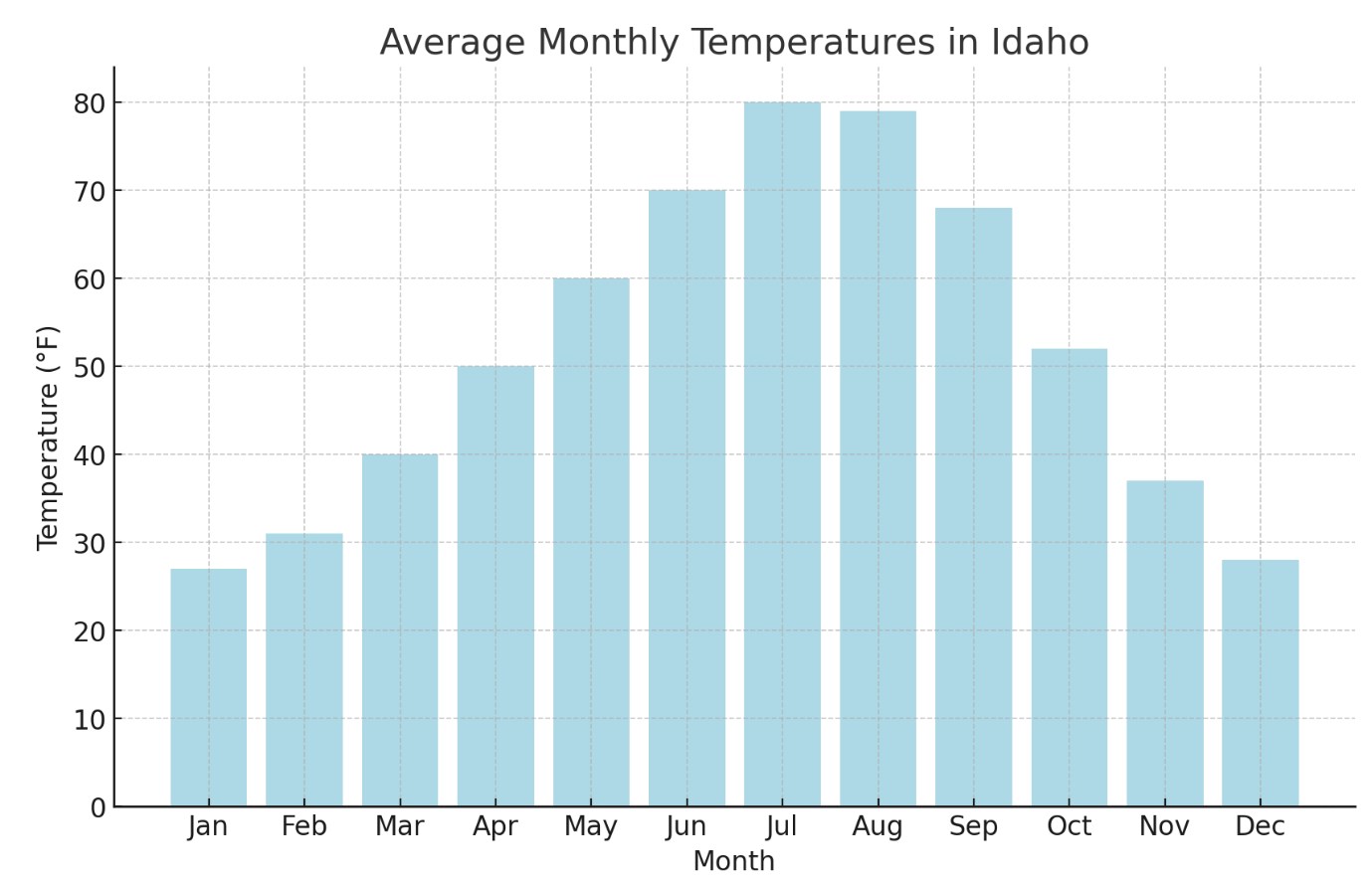
Temperatura media y precipitación por mes
| MES | TEMPERATURA PROMEDIO (°F) | TEMPERATURA MEDIA (°C) | PRECIPITACIÓN PROMEDIO (PULGADAS) |
|---|---|---|---|
| Enero | 23°F | -5°C | 1.5 |
| Febrero | 28°F | -2°C | 1.4 |
| Marzo | 36°F | 2°C | 1.5 |
| Abril | 45°F | 7°C | 1.4 |
| Puede | 55°F | 13°C | 1.8 |
| Junio | 64°F | 18°C | 1.3 |
| Julio | 72°F | 22°C | 0.5 |
| Agosto | 71°F | 22°C | 0.6 |
| Septiembre | 61°F | 16°C | 0.8 |
| Octubre | 48°F | 9°C | 1.1 |
| Noviembre | 35°F | 2°C | 1.6 |
| Diciembre | 26°F | -3°C | 1.8 |
Clima, ropa y lugares de interés mensuales
Enero
Clima: Enero es el mes más frío en Idaho, con temperaturas que oscilan entre -12 °C y -1 °C (10 °F y 30 °F), según la región. Las zonas montañosas, como las cordilleras Sawtooth y Bitterroot, experimentan fuertes nevadas, lo que crea condiciones perfectas para los deportes de invierno. En zonas más bajas, como Boise y la llanura del río Snake, también hace frío, con nevadas ocasionales.
Ropa: Para abrigarse en enero, vístase en capas: ropa interior térmica, un abrigo grueso de invierno, guantes y gorros aislantes. Las botas de nieve son esenciales para las actividades al aire libre, especialmente en zonas con nieve profunda. En zonas de mayor altitud, se recomienda llevar equipo de esquí para quienes planeen esquiar.
Lugares de interés: Enero es una época excelente para visitar Sun Valley, una de las principales estaciones de esquí de Idaho, conocida por su esquí, snowboard y cultura après-ski de primera clase. Si buscas aventuras invernales más remotas, dirígete a las montañas Selkirk, cerca de Sandpoint, para practicar raquetas de nieve, esquí de fondo y la oportunidad de observar la vida silvestre en un sereno paisaje invernal. El Parque Estatal Bruneau Dunes, en el sur de Idaho, ofrece una experiencia única: explorar dunas de arena cubiertas de nieve.
Febrero
Weather: February in Idaho remains cold, with temperatures ranging from 15°F to 35°F (-9°C to 2°C). Snowfall continues, particularly in the northern and mountainous regions, providing excellent conditions for winter sports. The southern parts of the state, including Boise, may see a mix of snow and rain, with occasional sunny days breaking through the winter chill.
Clothing: Warm layers, including thermal clothing, a heavy coat, gloves, and hats, are necessary to stay comfortable in February. Snow boots are essential for navigating snowy and icy conditions. In the mountains, proper ski gear is recommended for outdoor activities.
Landmarks: February is a great time to explore the Payette National Forest, where snowmobiling and cross-country skiing are popular activities. The forest’s vast, snowy landscape offers a winter wonderland for adventure seekers. For a more relaxed experience, visit Lava Hot Springs in southeastern Idaho, where you can soak in natural hot springs surrounded by snow-covered landscapes. The winter season also provides a unique opportunity to explore the Craters of the Moon National Monument, where the stark volcanic landscape is transformed by snow, offering a surreal and beautiful sight.
March
Weather: March in Idaho marks the transition from winter to spring, with temperatures ranging from 25°F to 45°F (-4°C to 7°C). Snow is still common, particularly in the northern and higher elevations, but milder days become more frequent, especially in southern Idaho. As the snow begins to melt, rivers and streams start to swell, setting the stage for springtime activities.
Clothing: Layered clothing is ideal for March, as temperatures can fluctuate throughout the day. A medium-weight jacket, along with a hat and gloves, is recommended for colder mornings and evenings. Waterproof boots are useful for navigating slushy or wet conditions.
Landmarks: March is an excellent time to visit Hells Canyon, the deepest river gorge in North America. As the snow melts, the Snake River flows more rapidly, making it a great time for early-season whitewater rafting or jet boat tours. For a more leisurely activity, visit the Idaho Botanical Garden in Boise, where the first signs of spring begin to appear with early-blooming flowers and budding trees. The Sawtooth Mountains also start to open up for late-season snowshoeing or early spring hikes, offering stunning views as winter transitions to spring.
April
Weather: April in Idaho brings a significant change in weather, with temperatures ranging from 35°F to 60°F (2°C to 16°C). The snow continues to melt in the lower elevations, and spring fully takes hold, with blooming wildflowers and greening landscapes. Rain showers become more common, especially in the valleys, while the mountains may still see occasional snowfall.
Clothing: Light layers, including long-sleeved shirts, a medium-weight jacket, and waterproof footwear, are ideal for April. An umbrella or rain jacket is recommended for dealing with spring showers.
Landmarks: April is a wonderful time to visit Shoshone Falls, often referred to as the “Niagara of the West.” The falls are at their most powerful during spring when the snowmelt feeds the Snake River, creating a spectacular display of water cascading over the cliffs. The City of Rocks National Reserve in southern Idaho also begins to thaw, offering excellent opportunities for rock climbing and hiking among the unique granite formations. The Coeur d’Alene Scenic Byway in northern Idaho is a beautiful drive during this time, with views of the lake and blooming wildflowers along the route.
May
Weather: May sees the full arrival of spring in Idaho, with temperatures ranging from 45°F to 70°F (7°C to 21°C). The state experiences mild, pleasant weather, with longer days and abundant sunshine. The snow has largely melted in the valleys, while the higher elevations still retain some snow, making for a striking contrast in the landscape.
Clothing: Light, breathable clothing is ideal for May, including t-shirts, light jackets, and comfortable walking shoes. A rain jacket or umbrella may still be needed for occasional showers.
Landmarks: May is an ideal time to visit the Sawtooth National Recreation Area, where the snowmelt feeds into crystal-clear lakes and rivers, creating perfect conditions for fishing, hiking, and camping. The area’s wildflowers are in full bloom, adding vibrant colors to the stunning mountain scenery. The Snake River Canyon near Twin Falls is another must-visit, where you can enjoy hiking, kayaking, or simply taking in the views from the Perrine Bridge. Additionally, Boise’s Greenbelt, a 25-mile pathway along the Boise River, is perfect for walking, cycling, and enjoying the fresh spring air.
June
Weather: June ushers in summer across Idaho, with temperatures ranging from 55°F to 80°F (13°C to 27°C). The weather is warm, with increasing daylight hours and minimal rainfall. The state’s landscapes are lush and green, and the rivers are full from the snowmelt, making it an ideal time for outdoor activities.
Clothing: Light, breathable clothing such as shorts, t-shirts, and sandals is recommended for June. A hat, sunglasses, and sunscreen are essential for sun protection, and a light jacket may be useful for cooler evenings, especially in higher elevations.
Landmarks: June is an excellent time to explore the Frank Church-River of No Return Wilderness, one of the largest wilderness areas in the lower 48 states. The wilderness offers unparalleled opportunities for rafting, kayaking, and backpacking in a remote and pristine environment. For a more accessible adventure, visit Craters of the Moon National Monument, where you can hike through lava fields, cinder cones, and caves. The warm weather also makes it a great time to visit the Sun Valley area for mountain biking, horseback riding, and scenic chairlift rides.
July
Weather: July is the warmest month in Idaho, with temperatures ranging from 60°F to 90°F (16°C to 32°C). The weather is hot and dry, especially in southern Idaho, with long days and minimal rainfall. This is peak season for outdoor activities, with ideal conditions for hiking, camping, and water sports.
Clothing: Wear light, breathable clothing such as shorts, tank tops, and sandals. Sun protection is crucial, so be sure to use sunscreen, wear sunglasses, and a hat. A light jacket might be useful for cooler evenings, especially in the mountains.
Landmarks: July is perfect for exploring the lakes of northern Idaho, such as Lake Coeur d’Alene and Priest Lake, where you can enjoy boating, fishing, and swimming. The McCall area, located on Payette Lake, is a popular summer destination offering a variety of water activities, hiking, and mountain biking. For a unique experience, visit the St. Anthony Sand Dunes in eastern Idaho, where you can ride ATVs, camp under the stars, and explore the vast dunes that rise up to 400 feet high.
August
Weather: August continues the warm and dry trend in Idaho, with temperatures ranging from 58°F to 88°F (14°C to 31°C). The heat is still intense, particularly in the southern parts of the state, but the evenings begin to cool slightly. This is an excellent time for late-summer outdoor activities and exploring Idaho’s natural beauty.
Clothing: Light, airy clothing is recommended in August, including shorts, t-shirts, and sandals. Sun protection remains important, so use sunscreen, wear sunglasses, and a hat. A light jacket might be needed for cooler evenings, particularly in higher elevations.
Landmarks: August is a great time to visit the Idaho Panhandle National Forests, where you can hike through lush forests, fish in clear mountain streams, and explore scenic byways like the Lake Pend Oreille Scenic Byway. The Sawtooth Mountains are also stunning in August, offering endless opportunities for backpacking, rock climbing, and stargazing in the clear, dark skies. For a cultural experience, attend the Western Idaho Fair in Boise, where you can enjoy live music, rodeos, and traditional fair attractions.
September
Weather: September in Idaho brings the first hints of fall, with temperatures ranging from 50°F to 75°F (10°C to 24°C). The weather remains warm, but the heat begins to ease, and the nights become cooler. This is a perfect time for outdoor activities as the summer crowds thin out, and the state’s landscapes start to show the first signs of autumn.
Clothing: Light layers are ideal for September, with t-shirts and shorts for the warmer parts of the day and a light jacket or sweater for cooler mornings and evenings. Comfortable walking shoes are recommended for exploring outdoor areas.
Landmarks: September is an ideal time to visit the Owyhee Canyonlands in southwestern Idaho, known for its rugged beauty and remote wilderness. The cooler temperatures make it perfect for hiking, rock climbing, and exploring the deep canyons and unique rock formations. The Stanley Basin, surrounded by the Sawtooth Mountains, is another must-visit, offering excellent opportunities for fishing, kayaking, and hiking among the fall foliage. The Sun Valley Jazz Festival in late September is a great cultural event, attracting music lovers from around the world.
October
Weather: October sees a significant drop in temperatures across Idaho, ranging from 40°F to 65°F (4°C to 18°C). The fall foliage reaches its peak, especially in the northern and central parts of the state. The weather is typically dry and sunny, making it one of the most beautiful times to explore Idaho’s outdoors.
Clothing: Warmer layers, including sweaters, jackets, and long pants, are necessary for October. A heavier coat may be needed for cold days, especially in the mountains. Comfortable walking shoes are essential for exploring trails and parks.
Landmarks: October is a perfect time to visit the Salmon River, also known as the “River of No Return,” for a rafting or fishing adventure amid stunning fall colors. The Teton Valley in eastern Idaho is also breathtaking during this time, with vibrant autumn foliage and clear views of the Tetons. For a unique experience, visit the Old Idaho Penitentiary in Boise, which hosts special Halloween events and tours during the month of October, offering a glimpse into Idaho’s history with a spooky twist.
November
Weather: November in Idaho sees the onset of winter, with temperatures dropping to between 30°F and 50°F (-1°C to 10°C). Snowfall becomes more frequent, particularly in the northern and mountainous regions, signaling the start of the winter sports season. The valleys experience colder temperatures, with occasional snow and more frequent overcast days.
Ropa: En noviembre es necesario llevar capas abrigadas, como suéteres, chaquetas y pantalones largos. Para los días más fríos, sobre todo en la montaña, podría ser necesario llevar un abrigo de invierno, guantes y un gorro. Se recomiendan botas impermeables para condiciones de lluvia o nieve.
Lugares de interés: Noviembre marca el inicio de la temporada de esquí en Idaho, con estaciones como Sun Valley, Schweitzer Mountain y Brundage Mountain abriendo sus pistas. Para una experiencia cultural, visite el Capitolio Estatal de Idaho en Boise, donde podrá aprender sobre la historia y el gobierno del estado mientras se relaja en un cálido interior. El Museo de Arte de Boise es otro gran destino, que ofrece una combinación de exposiciones de arte contemporáneo y tradicional.
Diciembre
Clima: Diciembre en Idaho se caracteriza por temperaturas frías y nevadas frecuentes, especialmente en las montañas. Las temperaturas promedio oscilan entre -6 °C y 4 °C (20 °F y 40 °F). El paisaje del estado suele estar cubierto de nieve, creando un paraíso invernal perfecto para esquiar, hacer snowboard y practicar otros deportes de invierno.
Ropa: Para abrigarse en diciembre, es necesario llevar ropa de invierno gruesa, como chaquetas de plumas, capas térmicas, guantes y bufandas. Las botas impermeables y el equipo de nieve son esenciales para quienes visitan la montaña o practican deportes de invierno.
Lugares de interés: Diciembre es la época perfecta para disfrutar de las actividades invernales de Idaho. Visite Sun Valley Resort para disfrutar de esquí, snowboard y eventos festivos de primera clase. El Carnaval de Invierno de McCall, aunque comienza a finales de enero, merece la pena planificarlo, ya que ofrece esculturas de nieve, desfiles y deportes de invierno en un encantador entorno de pueblo de montaña. Para una experiencia más tranquila, visite el Área Recreativa Nacional Sawtooth, donde podrá disfrutar de raquetas de nieve o esquí de fondo en un sereno paisaje nevado.


